


Ask most adults what a credit score measures and you will hear confident guesses: how much money you have, how much you earn, how responsible you are as a person. All three are wrong. A credit score answers one much narrower question, and a teenager who understands that question before leaving home has a real head start.
The question is this: if this person borrows money, how likely are they to pay it back on time? That is the whole job of the score. Not wealth. Not income. Not character. It is a prediction about repayment behavior, built from a history of borrowing and repaying.
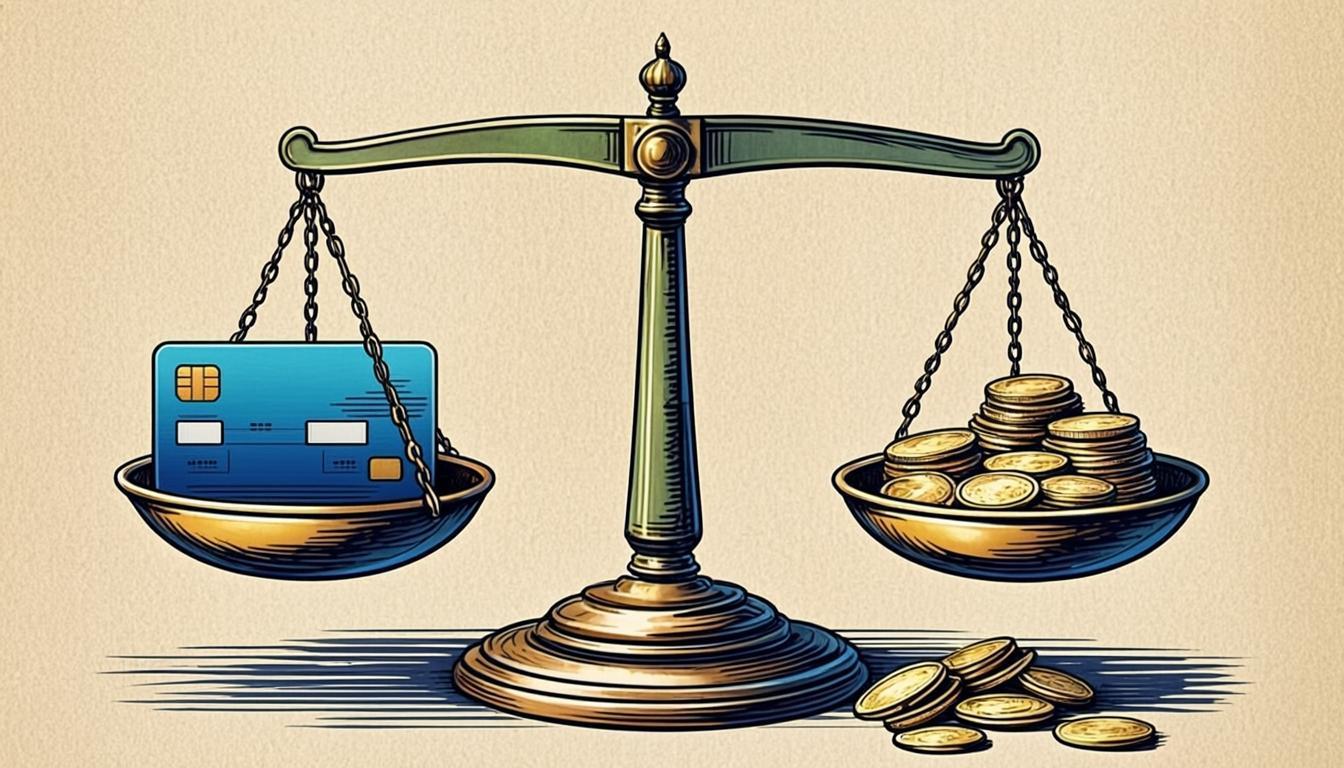
A credit score does not measure how much money you have. It measures what you do with money you borrowed.
Why income does not appear in the formula
This part surprises people: salary is not an ingredient in a credit score. A high earner who pays late can score worse than a modest earner who pays every bill on time. The score is deliberately blind to income because lenders can verify income on their own. What the score tries to capture is behavior over time, and behavior is something a young person can begin shaping years before a first salary.
That is also why the score matters at eighteen rather than at thirty. The moment a young adult signs up for a phone plan, a store card or a first credit card, a file opens and history starts accumulating. Someone who understands the system on day one makes different choices from someone who first hears about it during a declined application.
The five factors, in rough order of weight
Credit scores in the United States are usually built from five categories of information. The exact formulas vary by scoring company and are not published in full detail, but the rough shape is well understood:
- Payment history: whether bills and loans were paid on time. This is the heaviest single factor.
- Amounts owed: how much is borrowed relative to available limits, especially on credit cards. Lower is better.
- Length of credit history: how long accounts have been open, on average. Older is better, which is one reason an early start can help.
- New credit: how many recent applications and new accounts appear. A sudden burst reads as risk.
- Credit mix: the variety of account types, such as cards and installment loans. It matters, but it is the lightest factor.
Read that list again as a parent and notice what is missing: not one factor requires wealth. Every one of them describes behavior over time. Payment history and amounts owed together carry most of the weight, which means two habits, paying on time and keeping balances low, do most of the work.
Why this belongs in the teenage years
The score becomes relevant at precisely the moment parental supervision fades. Landlords, lenders, utilities and some employers look at credit. A young adult who meets the concept for the first time while being turned down for an apartment is learning the system at its most expensive moment, with the lesson attached to a consequence.
The good news is that the early moves are gentle. A common starting point is becoming an authorized user on a parent's credit card, which can add the parent's account history to the teen's file. Another is a first card with a small limit, used for one small recurring expense and paid in full every month. The right path varies by family. The principle does not: on time, in full, every time.
One sentence a teenager can remember
If the whole topic had to be compressed into one sentence a fifteen year old would actually keep, it might be this: a credit score is a reputation for repaying, and reputation is built in small, boring, repeated actions, exactly like showing up on time for a job.
That framing matters because it removes both the fear and the mystery. A score is not a judgment of worth. It is a track record, and track records can be started deliberately, before there is anything urgent at stake.
In Outtlearn's live program, credit gets a full week of its own. Students run a realistic simulation in which they watch what a carried balance actually costs month over month, and compare it with the discipline of paying in full. If you want your teenager to meet credit on their own terms instead of a lender's, look at the upcoming cohorts.
Written by Nandani Kabra
Nandani Kabra teaches Outtlearn’s live cohorts and writes about money, school and the teenage years.