

Why 39 states now require financial literacy to graduate
By Nandani Kabra

For most of recent American history, personal finance was an elective that few schools offered and fewer students took. It lived near the bottom of the course catalog, somewhere between the practical arts and the afterthoughts, while graduation requirements stayed focused on math, science and literature. That quietly changed, and it changed faster than almost anything else in modern education policy. Thirty-nine states have now passed laws or policies requiring high-school students to study personal finance before they graduate.
The speed of the shift is the part worth pausing on. Most of these laws arrived since 2021, which makes personal finance a rare piece of education policy with broad bipartisan support. In a period when legislatures struggle to agree on almost anything about schools, these bills have passed with votes to spare. Parents, employers and legislators converged on the same observation from different directions: young adults were meeting credit cards, student loans and paychecks with no preparation at all.
What the mandates actually require
Most states require a standalone half-credit personal finance course, usually a semester taken at some point across the four years of high school. Some accept financial literacy embedded in another course, such as economics, so long as the required topics are genuinely covered. The content itself is remarkably consistent from state to state: budgeting, credit, taxes, saving and investing. What varies most is timing. Each law names the graduating class or the school year when the requirement takes effect, which means two neighboring districts can be operating under different rules in the same year.
The record, from the survey that counts the mandates to the outlets that have followed the wave. Each card is a screenshot of the real page and links straight to it:
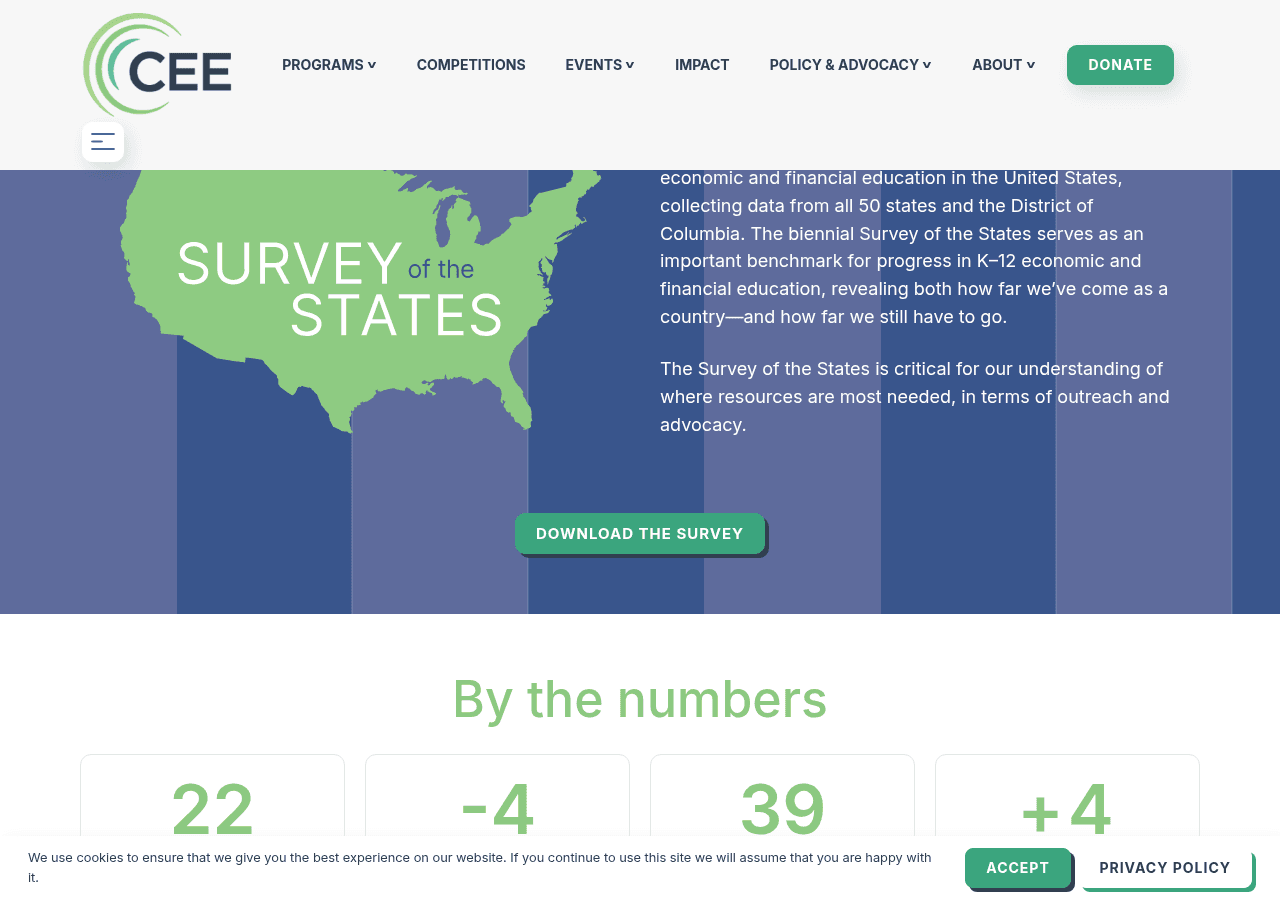
Council for Economic Education · March 2026
Read the coverage on councilforeconed.org

CNBC · December 5, 2023
Read the coverage on cnbc.com

NPR · May 16, 2023
Read the coverage on npr.org
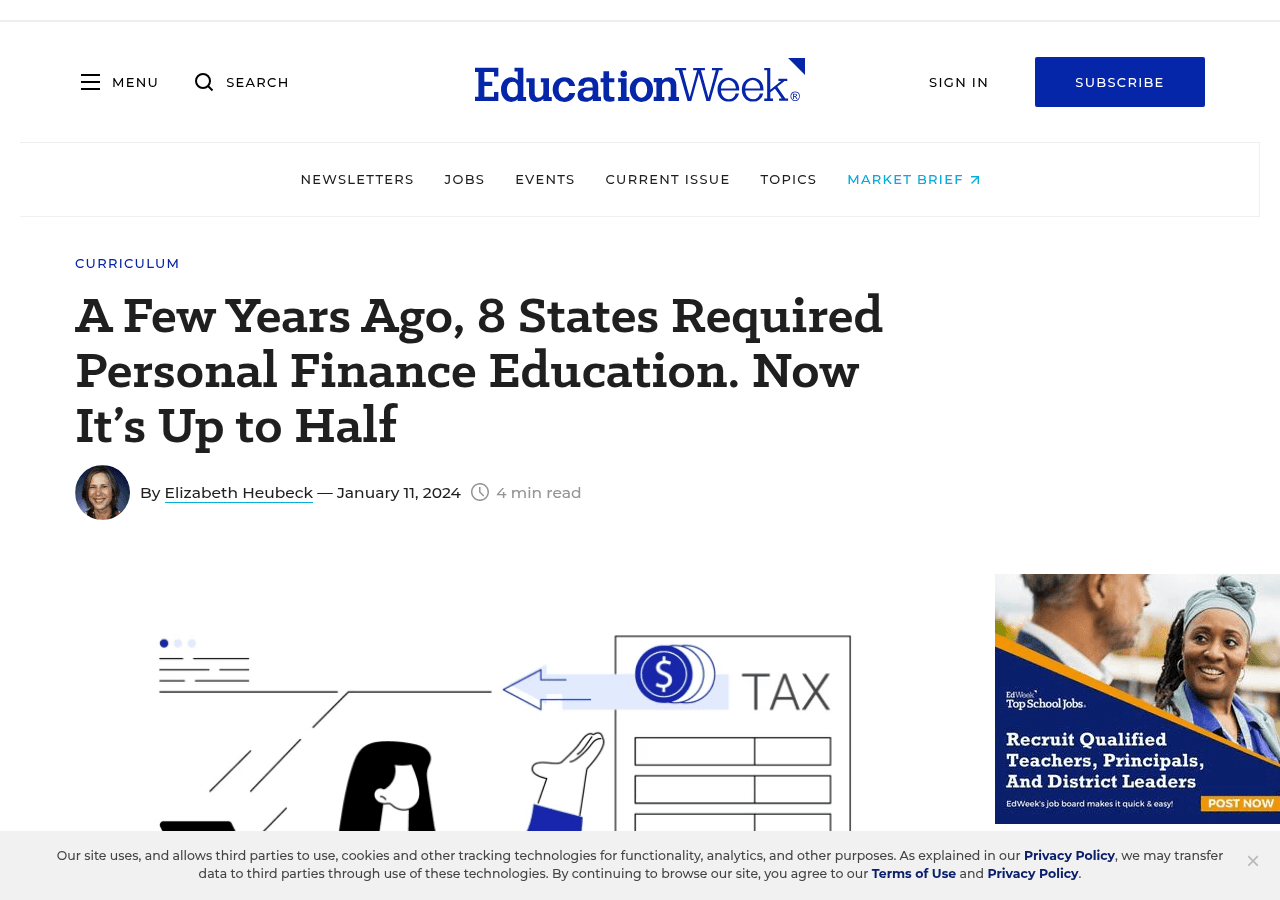
Education Week · January 11, 2024
Read the coverage on edweek.org

K-12 Dive · July 10, 2024
Read the coverage on k12dive.com
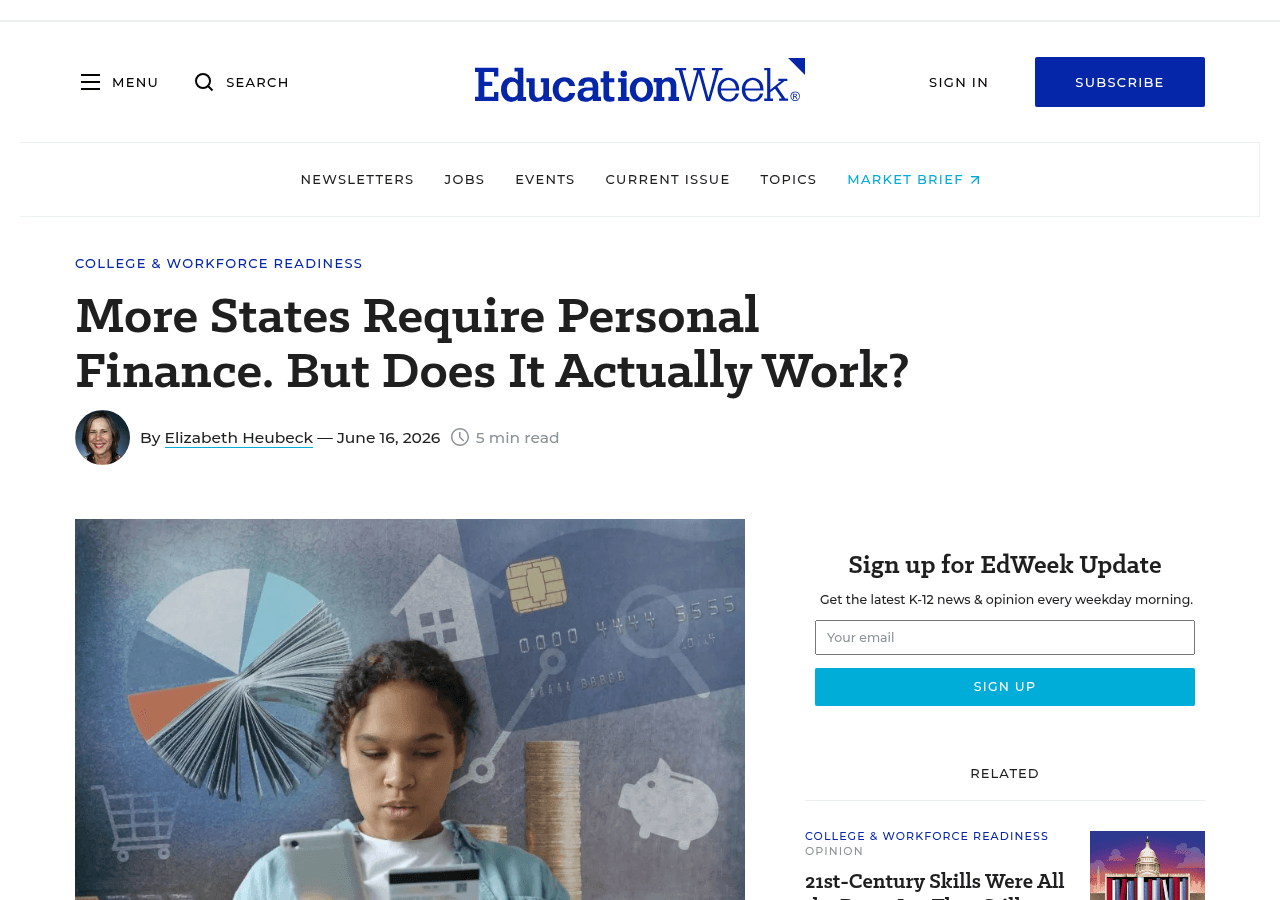
Education Week · June 16, 2026
Read the coverage on edweek.org
Why now
The pressures that pushed legislators were not mysterious. Student loan balances grew into a national argument. Credit card delinquency has risen among the youngest borrowers. And the same story kept surfacing in testimony: a teenager's first paycheck arrives noticeably smaller than the one they were promised, and nobody ever explained where the difference went. That gap between gross and net pay, met with no preparation at all, became a standing exhibit in hearings around the country. Lawmakers who could agree on little else could agree that an eighteen year old should not have to learn about withholding by surprise.
Financial literacy went from a nice-to-have elective to a graduation requirement in 39 states in under five years.
The full list of states
Thirty-nine states have now passed a personal finance mandate. Grouped by when the requirement takes hold:
Required now
12 states
The first wave. These states have required personal finance for several graduating classes already.
- Utah
- Virginia
- Tennessee
- Alabama
- Missouri
- Mississippi
- Iowa
- New Jersey
- Indiana
- North Carolina
- Oklahoma
- Illinois
Passed in 2022 and 2023
14 states
Signed during the fastest two years of expansion. Requirements reach the classes of 2026 through 2028.
- Ohio
- Georgia
- Florida
- Michigan
- South Carolina
- West Virginia
- Rhode Island
- Kansas
- Connecticut
- Louisiana
- Minnesota
- Wisconsin
- New Mexico
- Oregon
Signed, phasing in
6 states
Signed between 2023 and 2024. Requirements reach the classes of 2028 through 2031.
- Delaware
- Hawaii
- Colorado
- California
- Pennsylvania
- Massachusetts
The newest wave
7 states
Signed between 2024 and 2026. First required classes arrive through the end of the decade.
- Texas
- New York
- Arizona
- Nevada
- Maryland
- Kentucky
- New Hampshire
Requirements differ in exact shape and timing. Some states accept an embedded curriculum in place of a standalone course. For the precise rule in your state, check the department of education.

What it means for parents
A mandate is a floor, not a ceiling. It guarantees exposure, not depth, and it arrives on a legislature's schedule rather than your teenager's. Timing matters more than parents sometimes realize. A current junior may graduate before a state's requirement begins, while a freshman might wait two or three years for a single semester course. Class sizes and depth vary by district, and a requirement satisfied with a worksheet is a different thing from one satisfied by a teacher with room to run real scenarios. Parents who want the skill earlier than the mandate schedule provides, or more thoroughly than a crowded classroom allows, have live options.
Outtlearn exists for exactly that gap: a live, three-week program that covers the same ground a mandate requires, taught in small cohorts with work you can actually see. If you want the skill on your family's schedule instead of the legislature's, see how the program runs.
Written by Nandani Kabra
Nandani Kabra teaches Outtlearn’s live cohorts and writes about money, school and the teenage years.