

Why fifteen is the right age to start investing
By Nandani Kabra
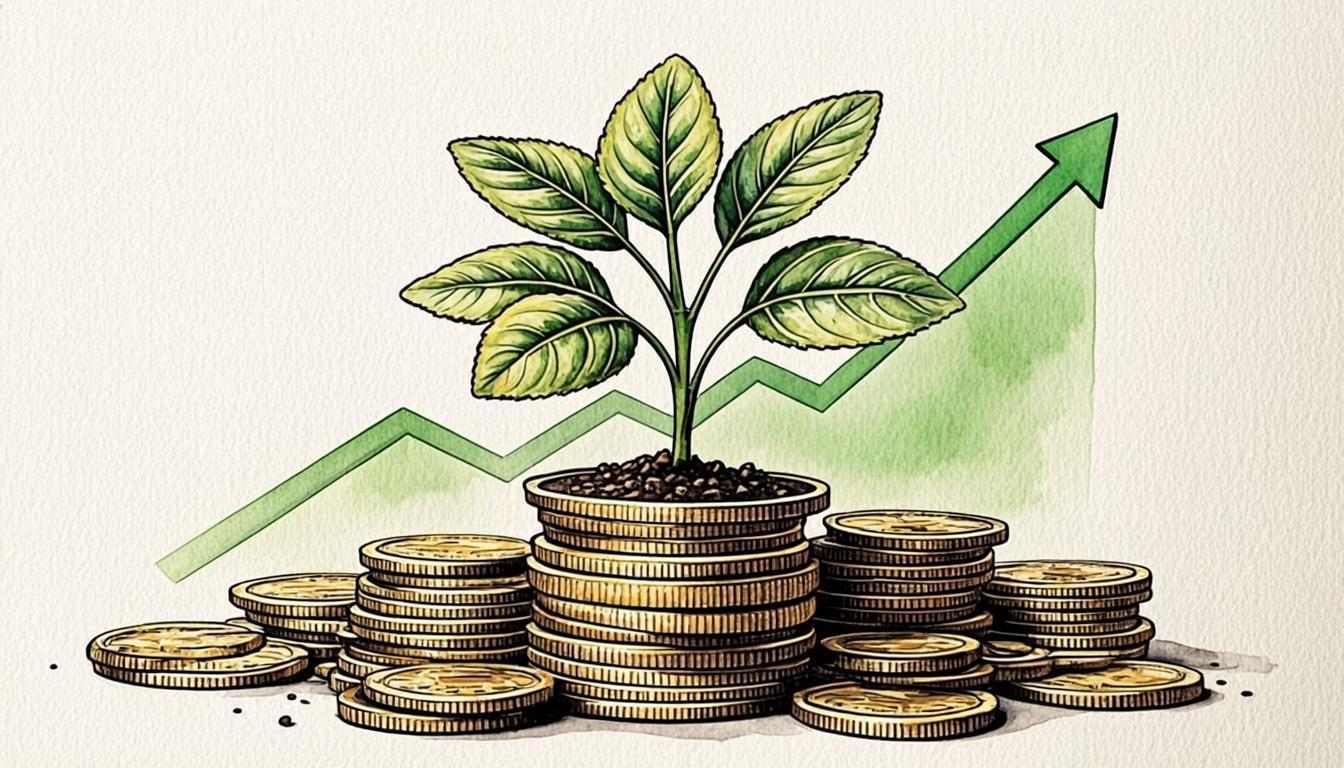
There is a peculiar fact about investing: the people who benefit most from understanding it are usually the ones with the least money to invest. A fifteen year old with no income and a part time job's worth of savings owns something a mid career executive cannot buy at any price.
That something is time, and it is the reason the teenage years are the right moment for this subject. Not to trade, not to pick stocks, but to understand what time does to money.
Time is the only ingredient in investing that money cannot buy back.
What compound growth actually is
Investing is often described as putting money somewhere so it grows. The engine behind that growth is compounding, and it deserves a slow look. Compound growth means the growth itself starts to grow. Instead of earning a return only on the amount you put in, you earn a return on the amount you put in plus everything it has already earned.
Over a single year this looks unimpressive. Over decades it is the reason a small early start can pass a large late one, and it is the closest thing investing has to a shortcut.
Here is a purely hypothetical illustration with round numbers, chosen because the arithmetic stays easy. Imagine an investment that grows at exactly seven percent a year. Seven percent is not a promise, a forecast or a typical figure. It is just a number that keeps the math clean.
- A teenager invests one thousand dollars at fifteen and never adds another dollar.
- Left alone, the balance roughly doubles every ten years: about two thousand at twenty five, four thousand at thirty five, eight thousand at forty five.
- A parent who invests the same one thousand dollars at forty five reaches about four thousand at sixty five.
- Same money, same growth rate. The only difference is the years the growth had to work.
The doubling in that example comes from an old rule of thumb called the rule of 72: divide 72 by the annual growth rate and you get the approximate number of years for money to double. It is a memory aid, not a prediction, but it makes the shape of compounding easy to carry around in your head.
Understanding risk before the first paycheck
The math is only half the reason fifteen is the right age. The other half is risk. Markets do not move in a polite upward line. They fall, sometimes sharply, and a person who has never watched a number go down has no idea how they will feel when it happens with their own money.
A teenager who meets investing now can watch a hypothetical balance wobble in a simulation, feel the discomfort and practice the response, all with nothing at stake. Later, when a first real paycheck is invested and a downturn arrives, the response is not panic. It is memory. That is the quiet argument for early financial education in general: feelings about money get trained either in low stakes environments or high stakes ones. There is no third option.
Seeds, baskets and the shape of patience

The oldest piece of investment wisdom also happens to be the simplest: do not put all your eggs in one basket. In investing terms this is diversification, holding many different things so that no single failure can sink the whole plan. It is why broad and diversified is the standard starting point for beginners, and it pairs naturally with the long runway a teenager has.
Notice what all of this rewards. Not cleverness, not timing, not luck. Patience, spread across many small positions and given as many years as possible to work. Those are habits of mind, and the mid teens are precisely when minds are choosing their habits.
Learning it, not rushing to do it
To be clear about what is being suggested: a fifteen year old does not need a brokerage account. Understanding compound growth, diversification and risk is knowledge work, and knowledge work is free. The actual investing can wait until there is real income and real goals. What should not wait is the understanding, because the years are the whole point.
It is also worth saying plainly: Outtlearn teaches concepts, not investment advice. Every number used in class is hypothetical, chosen to make an idea visible, never a prediction about any real asset or a recommendation to buy one.
Adults often say they wish someone had taught them this at fifteen. The wish is usually framed as money lost, but the deeper loss is the decade or two of compounding that no later effort can recover. The most valuable thing a teenager can invest is not dollars. It is the years those dollars would have had.
That idea is what Outtlearn's investing week is built around. Students run decade-spanning simulations, watch hypothetical balances grow and see what waiting costs in plain numbers. If you would like your teenager to meet these ideas while the runway is longest, explore the curriculum.
Written by Nandani Kabra
Nandani Kabra teaches Outtlearn’s live cohorts and writes about money, school and the teenage years.